




NAVED ALAM
A high credit score and a healthy annual income may improve your chances of securing a home loan, but they do not guarantee approval. Existing loan repayments, monthly expenses and the value of the property also play an important role in a lender’s decision.
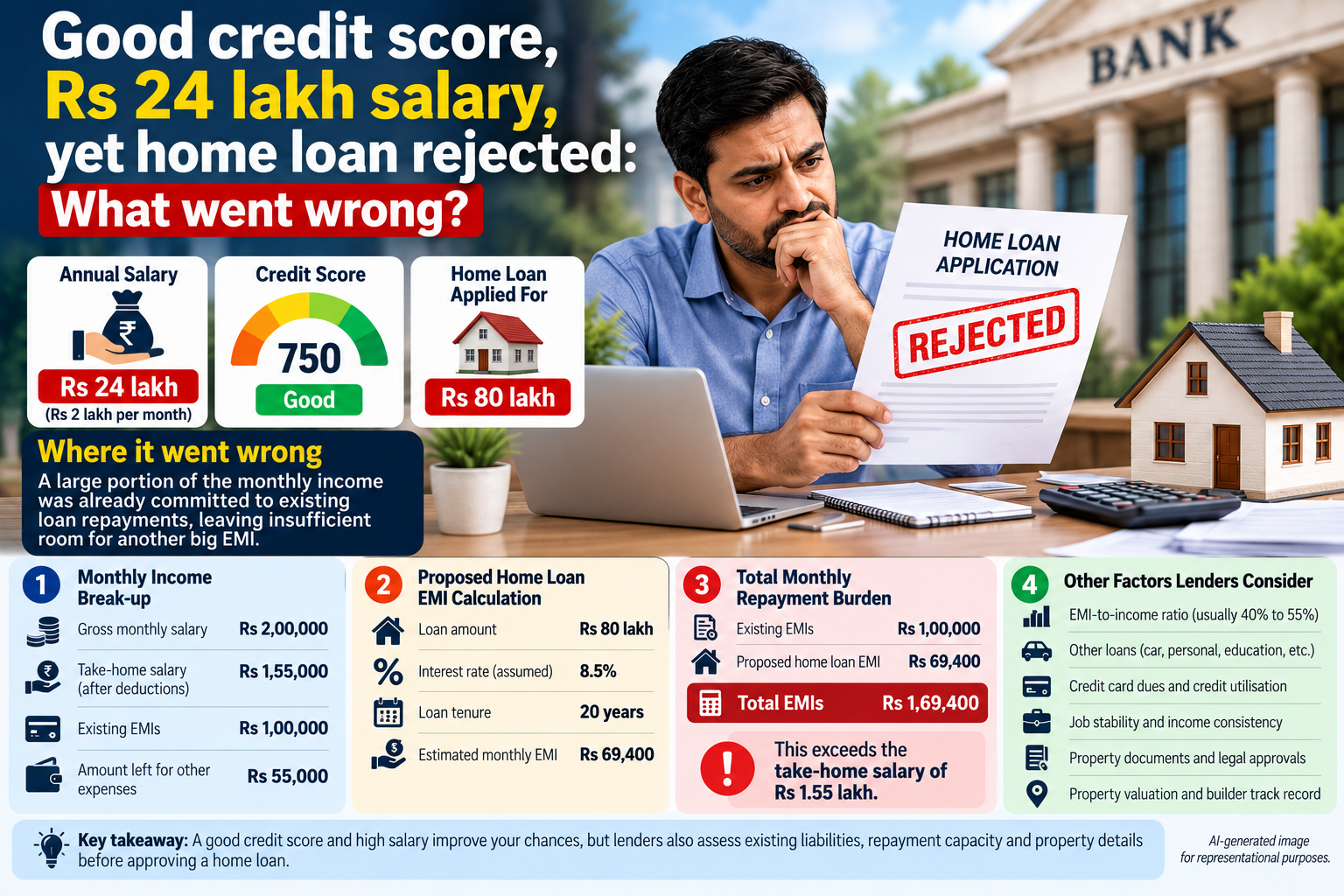
Consider the case of a 36-year-old IT professional earning Rs 24 lakh annually, with a credit score of 750. The borrower applied for an Rs 80 lakh home loan, expecting the income and credit history to support the application. However, the lender rejected the request because a large portion of the monthly income was already committed to existing loan repayments.
The borrower was earning around Rs 2 lakh a month before deductions and taking home approximately Rs 1.55 lakh. Existing equated monthly instalments (EMIs) accounted for nearly Rs 1 lakh, leaving only Rs 55,000 for household expenses and other financial needs.
An Rs 80 lakh home loan at an assumed interest rate of 8.5% over 20 years would involve a monthly EMI of approximately Rs 69,400.
This would take the total monthly loan repayments to nearly Rs 1.69 lakh, exceeding the borrower’s take-home salary. The lender therefore had reason to question whether the additional loan would be affordable.
Why a good credit score is not enough
A credit score indicates how responsibly a borrower has managed credit in the past. Timely repayment of loans, low credit utilisation and a consistent repayment history can help build a strong score.
However, lenders also assess whether an applicant has sufficient income to manage another loan.
A score of 750 is generally considered healthy, but banks and housing finance companies examine several other factors, including employment stability, existing liabilities, age, monthly income and repayment capacity.
A borrower with a good credit history may still face rejection if a significant share of their income goes towards existing EMIs.
What is the EMI-to-income ratio?
One important measure lenders use is the Fixed Obligation to Income Ratio (FOIR). It indicates how much of a borrower’s monthly income is committed to existing and proposed loan repayments.
Lenders generally prefer borrowers to have sufficient disposable income after paying their EMIs. Depending on the lender, income level and applicant’s financial profile, the acceptable ratio may vary. A range of around 40% to 55% is commonly used as a broad reference.
For example, someone earning Rs 1 lakh a month but already paying Rs 60,000 in EMIs may find it difficult to qualify for another substantial loan.
Other financial commitments can affect eligibility
Home loan applications are assessed by considering a borrower’s overall financial obligations. Car loans, personal loans, education loans, consumer durable EMIs and buy-now-pay-later dues can all affect eligibility.
Credit card outstanding balances and high credit utilisation may also influence the lender’s assessment. Guarantees and co-signed loans can be considered as well, depending on the borrower’s potential repayment responsibility.
Even when all repayments are made on time, multiple active loans can reduce the amount a person is eligible to borrow.
Income stability and property documents matter
A regular salary does not automatically ensure approval. Lenders examine employment history, consistency of earnings and the stability of the applicant’s income.
Salary slips, bank statements, Form 16 and income tax returns are commonly checked to verify financial details. Self-employed applicants may need to submit financial statements, tax returns and other business records.
The property itself is another important factor. Banks examine ownership documents, legal clearances, approved building plans, valuation and other relevant records before approving a loan.
If the property has legal complications, incomplete approvals or a valuation lower than the proposed purchase price, the lender may reject the application or offer a smaller loan.
How to improve your chances of getting a home loan
Borrowers whose applications are affected by existing liabilities can take several steps before applying again.
Clearing smaller loans, reducing credit card outstanding balances and avoiding unnecessary fresh borrowing can improve monthly repayment capacity. Increasing the down payment and applying for a smaller loan can also reduce the proposed EMI.
Adding an eligible co-applicant with a stable income may improve overall loan eligibility. Applicants should also review their credit reports and correct any errors, including loans incorrectly shown as outstanding.
A home loan rejection does not necessarily mean that a borrower has a poor credit profile. It may simply indicate that the requested loan amount is not suitable for their current financial commitments.
Ultimately, lenders assess not just how much a person earns or how well they have repaid previous loans, but also whether they can comfortably manage another EMI over the long term.
Also Read : Rajdeep Sardesai Opens Up About Cancer Battle
For more news updates, visit Vision MP.