



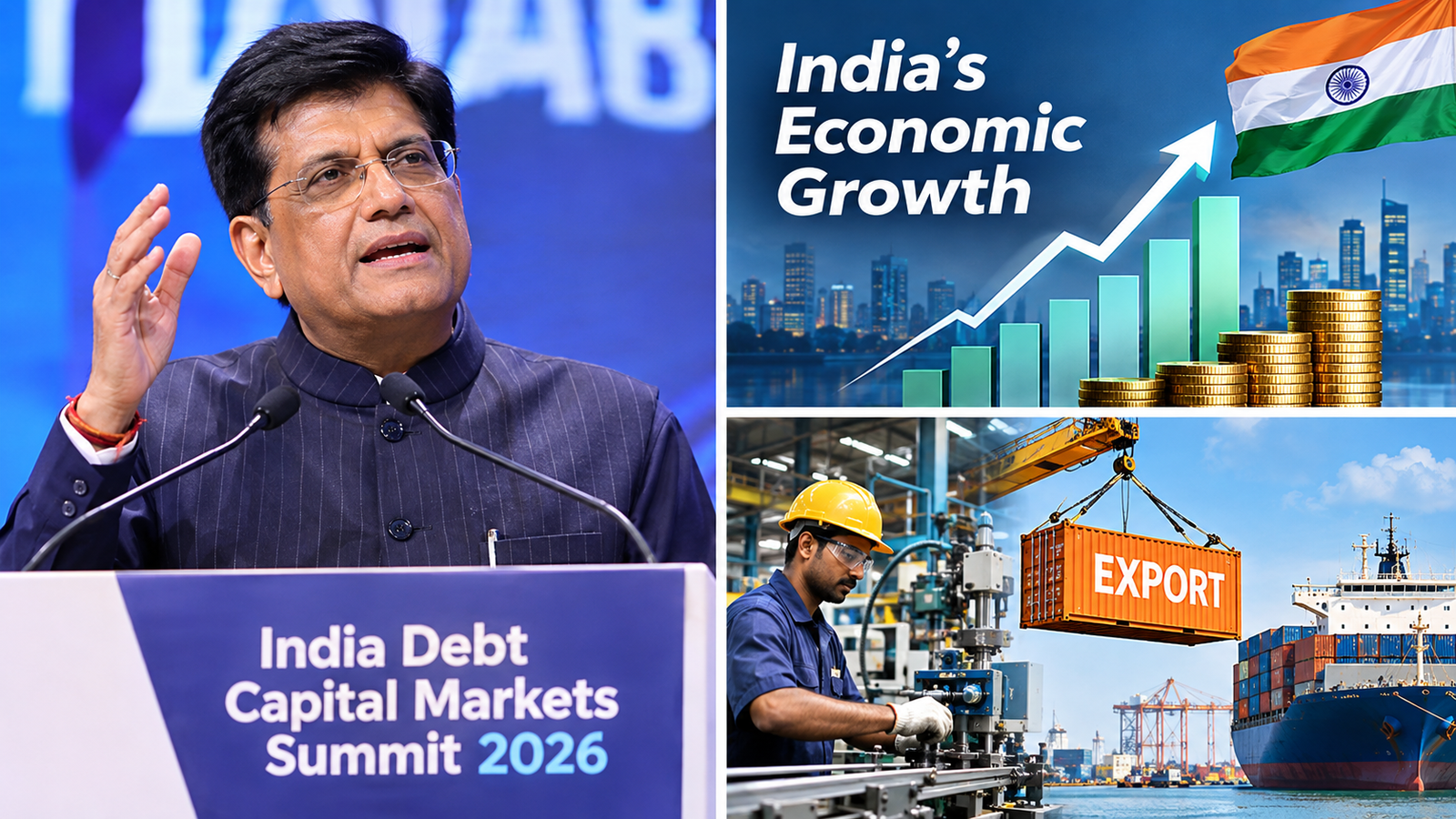
India continues to show economic strength and stability despite global challenges, Union Commerce and Industry Minister Piyush Goyal said on Friday. He highlighted the country’s steady economic growth, rising exports, ongoing reforms and growing investment opportunities, adding that India remains a trusted destination for global businesses and investors.
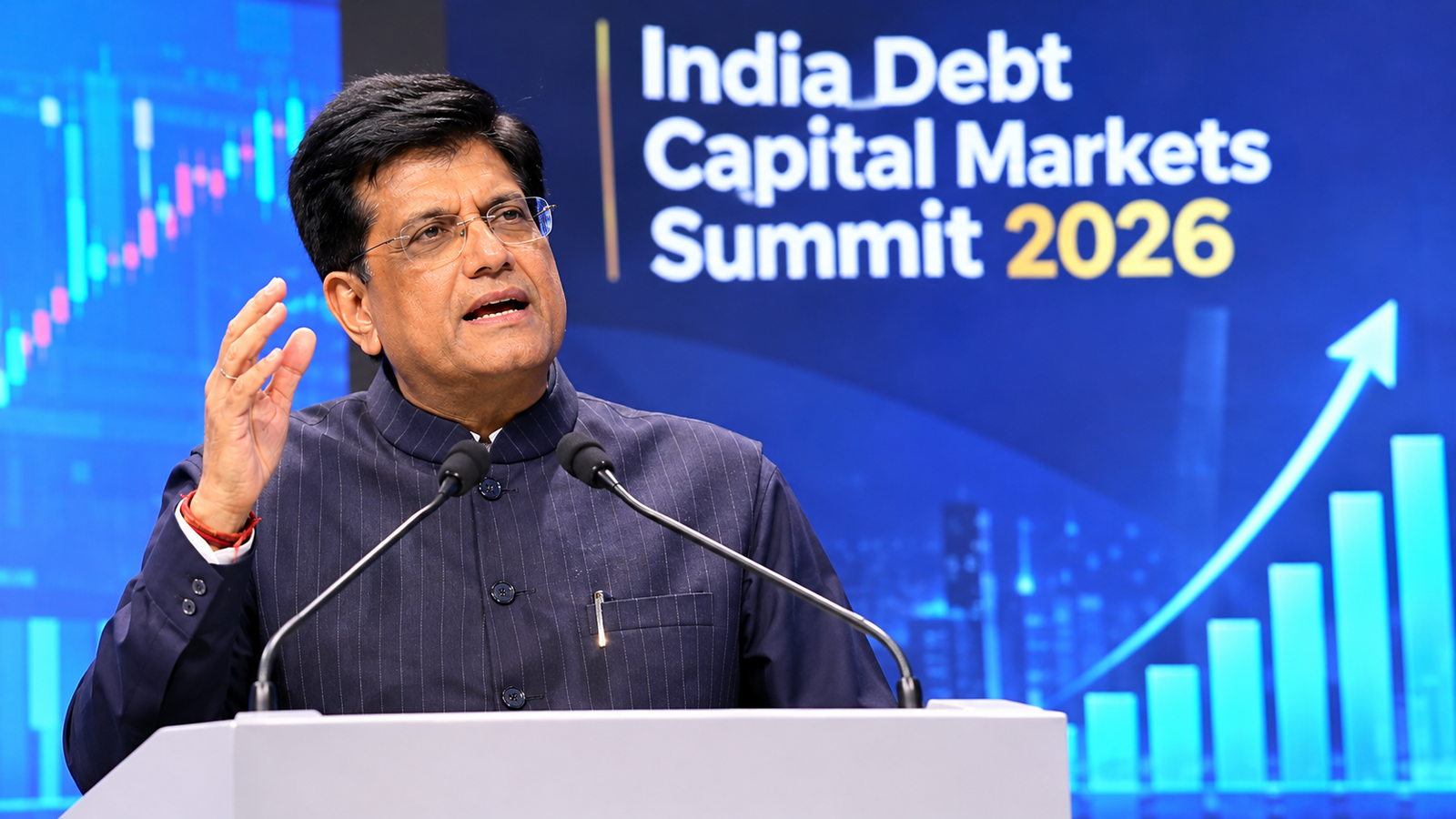
Speaking at the India Debt Capital Markets Summit 2026, Goyal said the country had maintained its growth momentum despite international conflicts, rising oil prices, trade uncertainties and disruptions in global supply chains.
He also called for stronger debt markets, more long-term investment and innovative financial solutions to support India’s development plans over the next two to three decades.
According to Goyal, India recorded economic growth of 7.8 per cent in the first quarter of the current financial year. He expressed confidence that the economy would maintain a similar pace in the second quarter.
Gross fixed capital formation, which reflects investment in assets such as buildings, machinery and infrastructure, grew by around 12 per cent. India’s exports also reached 570 billion dollars during the first seven months of the financial year.
The minister said the country was moving towards its ambitious target of one trillion dollars in total exports this year.
India’s Economic Growth Supported by Reforms and Global Trade Opportunities
Goyal said India’s economic progress was the result of continuous reforms and policy changes over the past 12 years rather than luck or coincidence.
He pointed to improvements in the ease of doing business, infrastructure development, tax reforms and efforts to attract foreign investment. The government, he said, was planning for the next 20 to 25 years under its vision of Viksit Bharat 2047.
India has also continued to work on Free Trade Agreements (FTAs) with several countries to expand opportunities for domestic businesses.
Goyal said nine trade agreements involving 38 developed countries had been concluded over the past four-and-a-half to five years. These agreements cover economies with a combined GDP of around 60 trillion dollars.
India is also negotiating eight to nine additional trade agreements, which could provide access to markets representing another 15 trillion dollars in economic output.
He said these agreements would create new opportunities for Indian manufacturers, exporters, farmers and service providers.
The minister also highlighted the growing strength of India’s domestic economy. Higher foreign exchange reserves, increased foreign investment and rising remittances have helped the country manage external economic pressures better than it could two decades ago.
He added that domestic institutional and retail investors had supported Indian financial markets during periods when foreign investors were withdrawing money.
Piyush Goyal Lists Five Priorities for Stronger Debt Markets
Focusing on the future of India’s financial system, Goyal said debt capital markets would play an important role in funding large infrastructure and industrial projects.
He mentioned upcoming investments in semiconductor manufacturing, electricity grids, data centres and the proposed Vadhavan port near Mumbai as examples of projects that would require large amounts of long-term financing.
The minister outlined five key priorities for strengthening India’s debt capital market.
1. Make bond markets a preferred source of funding: Large companies, public sector enterprises and infrastructure developers should use bond markets to raise money, particularly for projects that require long-term investment.
2. Encourage long-term investors: Insurance companies, pension funds, provident funds and mutual funds should explore a wider range of investment options instead of limiting themselves mainly to AAA-rated financial products.
3. Make bond trading easier: Goyal called for a simpler system that allows bonds to be traded and settled quickly, similar to the process followed in stock markets.
4. Turn trade opportunities into investments: Exporters and financial institutions should use the opportunities created by free trade agreements to expand production and improve their ability to serve international markets.
5. Continue working with the private sector: The government is ready to work with businesses and other stakeholders to introduce further reforms and improve the financial system.
Goyal also stressed the need to increase investment in manufacturing, improve product quality and create more value within India. He said the country should build a strong talent base in emerging technologies such as artificial intelligence, machine learning and quantum computing.
He concluded by saying that India’s long-term growth would depend on continued reforms, stronger cooperation between the government and private sector, and a financial system capable of supporting the country’s growing economic ambitions.