



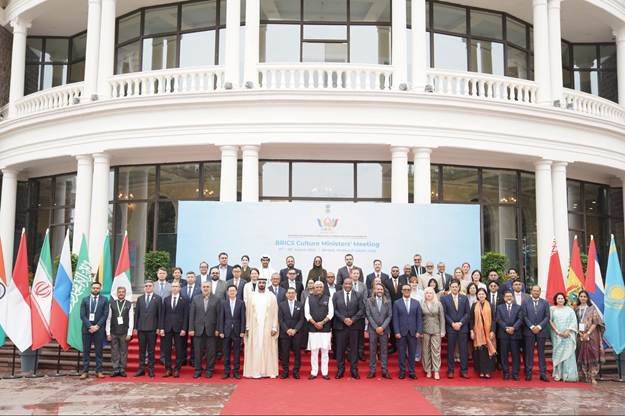
India Hosts 11th BRICS Culture Ministers Meeting In Bhopal, Adopts Bhopal Declaration
India hosted the 11th BRICS Culture Ministers’ Meeting in Bhopal on Saturday under its BRICS chairmanship, with the event concluding with the adoption of the Bhopal Declaration, a framework aimed at strengthening cultural cooperation among BRICS member and partner countries.
Officials described the declaration as a practical and forward-looking document for future collaboration in the cultural sector.
India Leads BRICS Culture Track Through Three Working Group Meetings
Under India’s chairmanship, the BRICS Culture Track progressed through three Culture Working Group meetings held over several months. The first meeting was held virtually on 29-30 April 2026, followed by a second meeting in Varanasi on 4-5 June 2026, and a third meeting in Bhopal on 5-6 August 2026.
Saturday’s ministerial meeting was attended by representatives from 14 countries, including 10 BRICS member nations and four partner countries. The participating BRICS members were Brazil, China, Egypt, Ethiopia, India, Indonesia, Iran, Russia, South Africa and the United Arab Emirates, with Egypt joining the ministerial session online. The partner countries present were Belarus, Cuba, Kazakhstan and Thailand.
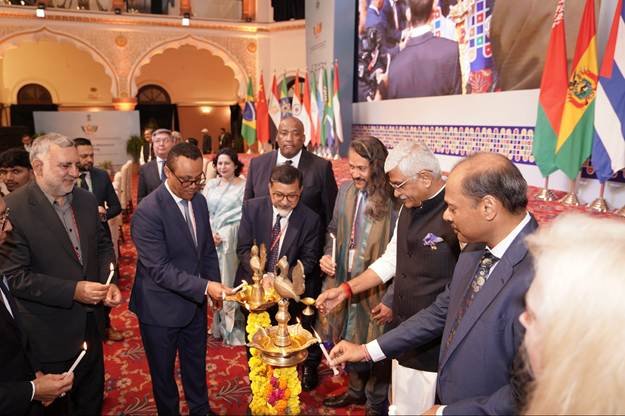
Culture ministers from Indonesia, South Africa and the UAE also took part in the ministerial meeting, reflecting high-level participation in the culture track. A total of 55 delegates attended the meetings held over the course of India’s chairmanship.
Discussions Guided By India’s BRICS Theme On Resilience And Innovation
Officials said the discussions were guided by India’s overarching BRICS theme, “Building Resilience, Innovation, Collaboration and Sustainability,” with an emphasis on translating dialogue into practical initiatives and strengthening institutional cooperation in the field of culture.
Bhopal Declaration Covers Creative Industries, Heritage Protection And AI
The Bhopal Declaration adopted on Saturday promotes cooperation in cultural and creative industries and the creative economy, including the exchange of methodologies, experiences and best practices, support for creators, networking, and expanded market access through digital tools. Officials said the declaration also provides for greater cooperation on UNESCO multinational nominations, provenance research, and the return and restoration of cultural property, including exploration of artificial intelligence-enabled tracing tools.
The declaration further addresses protection of traditional knowledge systems and traditional cultural expressions, cooperation among museums, libraries and archives on documentary heritage, digitisation and preservation, and protection of creators’ rights, transparency and fair remuneration regarding the use of copyrighted works in artificial intelligence systems.
India Announces Pilot Voluntary Artist Registry
As a concrete step under the cultural initiative, India announced a pilot initiative to develop a voluntary artist registry. Officials said the initiative is aimed at facilitating cultural exchange, strengthening professional networks, and creating greater opportunities for artists and creative professionals across BRICS countries.
Two-Day BRICS Culture Festival Showcases Artistic Traditions
A key cultural component of India’s BRICS chairmanship was the two-day BRICS Culture Festival held in Bhopal on 6-7 August 2026. The festival featured participation from BRICS member and partner countries, including Belarus, Brazil, Indonesia, Russia and the UAE, who showcased their rich and diverse artistic traditions.
Centred on the timeless Indian ideal “Sarve Bhavantu Sukhinah,” the festival provided a vibrant platform for cultural dialogue, artistic exchange and people-to-people contact. On the second day, a joint performance featuring various languages of BRICS countries symbolised unity through cultural diversity.
Culture Track Enables Bilateral Meetings Between Member Countries
The culture track also provided an opportunity for bilateral cooperation, with bilateral meetings held at the level of culture ministers and secretaries of culture ministries from participating countries. Officials said these meetings allowed for an exchange of views on strengthening bilateral cultural cooperation and exploring areas of mutual interest.
Delegations Experience India’s Cultural Heritage Through Site Visits
The event also gave visiting delegations an opportunity to experience India’s rich cultural and civilisational heritage. On 5 August, delegations visited the Indira Gandhi Rashtriya Manav Sangrahalaya (IGRMS) in Bhopal. Following the ministerial meeting on Saturday, delegations were taken to Sanchi to experience its significant Buddhist heritage. A visit to Bhimbetka is scheduled for the morning of 9 August, offering participating delegations an opportunity to experience India’s prehistoric rock shelters and ancient cultural heritage.
India Reaffirms Commitment To Deeper Cultural Partnership
India expressed appreciation to all participating BRICS member and partner countries for their creative collaboration and active participation during its chairmanship, and reaffirmed its commitment to continued cooperation towards a more connected, inclusive and future-ready cultural partnership within BRICS.
Also read: BRICS Delegates Awestruck By Sanchi’s Buddhist Heritage