



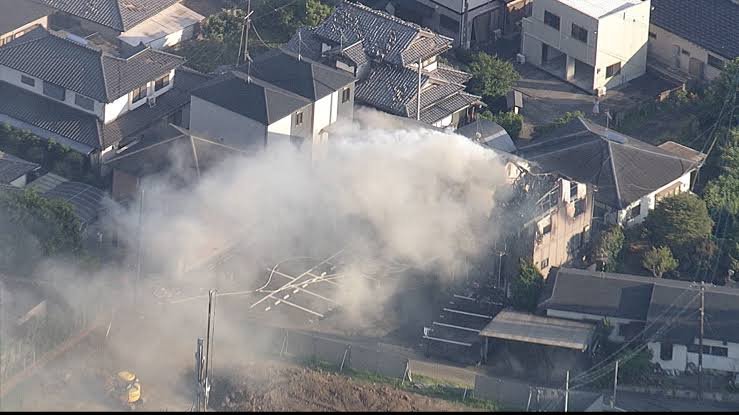
A powerful earthquake struck Kumamoto Prefecture in southern Japan on Tuesday afternoon, collapsing part of a shopping mall and forcing more than 1.5 lakh people to evacuate to safety.
The quake was first measured at magnitude 7.1 by Japan’s Meteorological Agency, but the US Geological Survey later revised the figure to 6.8. It struck at 4:27 pm local time, at a shallow depth of about 10 kilometres, and registered the maximum level of 7 on Japan’s separate seismic intensity scale, known as shindo.
The second floor of an AEON Mall in Kashima town caved in soon after the tremors, with local reports of an explosion inside the building. More than 50 people are feared trapped in the debris, and several have been injured. Fire and rescue teams are working to reach those still inside.
Tsunami Warning Issued, Then Lifted
Japan’s weather agency issued a tsunami warning shortly after the quake, cautioning that waves of up to one metre could hit the coast. The alert covered the Ariake and Yatsushiro seas along the coastlines of Kumamoto, Nagasaki, Fukuoka and Saga prefectures. Authorities withdrew the warning about two hours later, after no major waves were recorded.
Broadcaster NHK showed cracks running across roads and bridges, fires breaking out in some buildings, and other visible damage across the affected region.
Rescue Effort And Damage Assessment Underway
Japan‘s Prime Minister Sanae Takaichi confirmed that damage from the earthquake is widespread. Around 3,600 troops have been deployed for rescue and relief work, with an additional 300 personnel from the Japan Self-Defence Force joining the effort. She expressed condolences to everyone affected by the disaster.
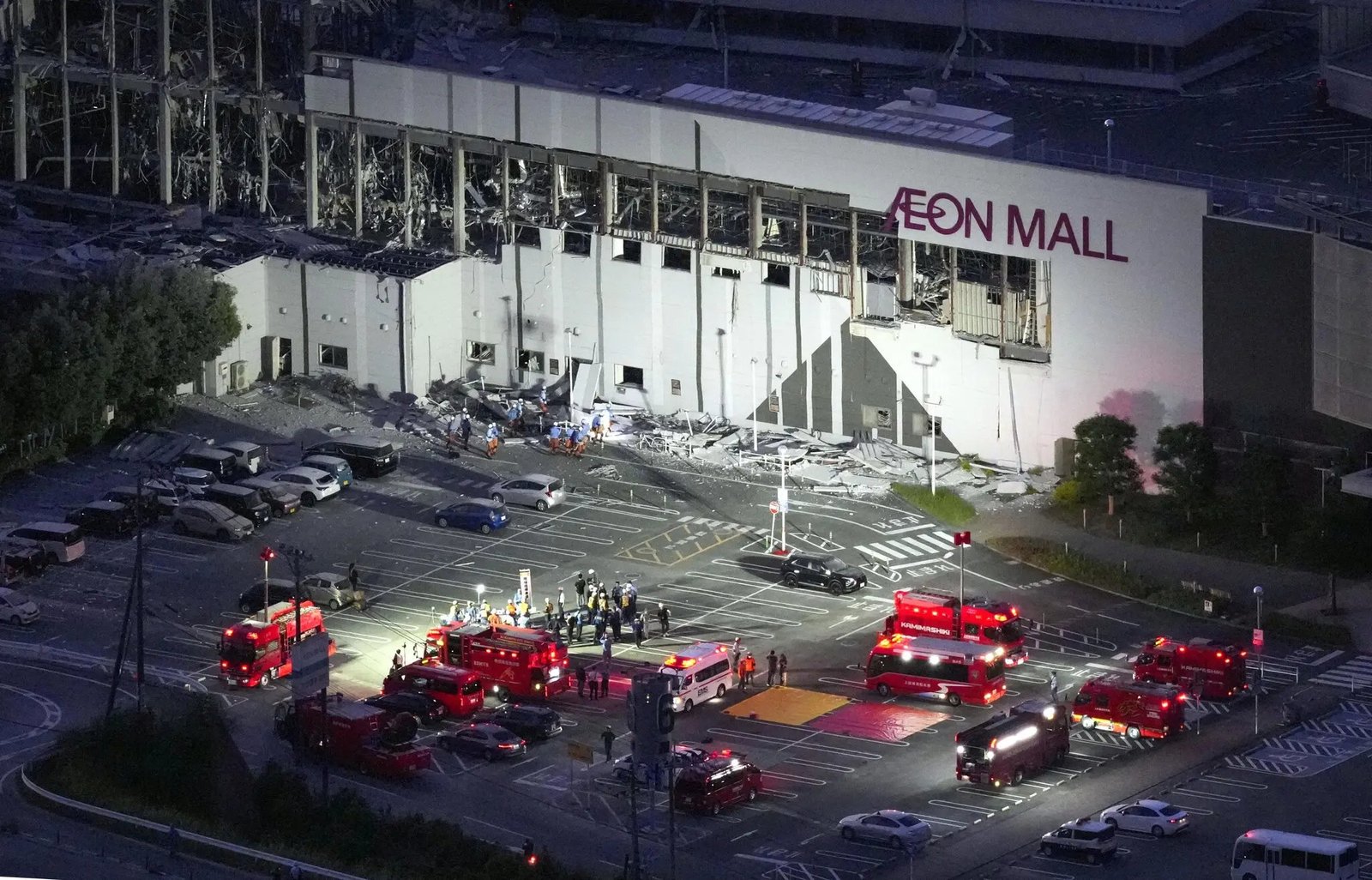
More than 48,000 homes lost power after the quake, and crews from Kyushu Electric Power are working to restore supply. Bullet train services in the region were suspended as a safety measure, leaving passengers stranded at stations, including Fukuoka’s Hakata Station. Officials also confirmed that a wall section of the historic Kumamoto Castle collapsed, and dozens of aftershocks, ranging from magnitude 1 to 4, have since been recorded.
Japan’s Nuclear Regulation Authority informed the International Atomic Energy Agency that the Sendai nuclear power plant suffered no damage from the earthquake. The IAEA said it continues to monitor the situation closely.
Why This Matters
Kumamoto sits along one of Japan’s most active fault systems and was hit by a deadly earthquake in 2016 that killed more than 50 people. Tuesday’s disaster is a reminder that even a well-prepared, quake-resistant country like Japan remains vulnerable when tremors strike populated areas.
The explosion and structural collapse at a modern shopping mall — a building type built to modern safety codes — will likely raise questions about what caused the blast and whether existing safety standards need review. Japan’s fast response, including troop deployment and swift tsunami alerts, also shows why the country’s disaster management system is often studied as a model by other quake-prone nations, including parts of India.
For more coverage on inflation, fuel prices and Madhya Pradesh politics, read updates on VisionMP.