



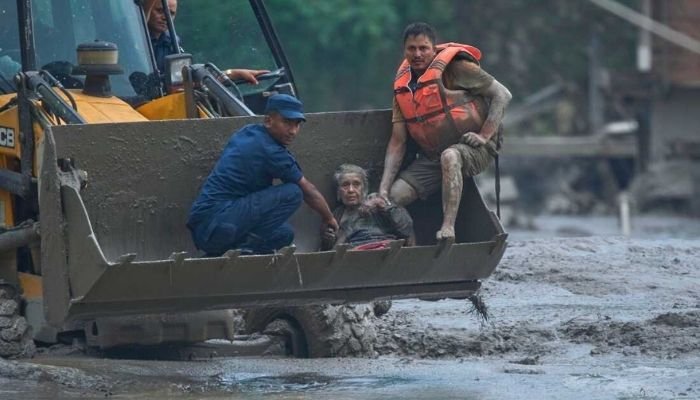
Nepal is facing a growing challenge in storing and identifying bodies recovered from rivers after devastating flash floods killed hundreds and left more than 1,000 people unaccounted for, according to media reports.
Bodies swept away by flooding in the Bhotekoshi and Trishuli river systems have been recovered hundreds of kilometres downstream, including in Nuwakot, Chitwan, Tanahun and Nawalparasi.
Morgues and hospitals in several districts have reportedly reached or exceeded capacity, forcing authorities to transfer bodies and prepare temporary storage facilities.
Chitwan has emerged as a major recovery area, with more than 130 bodies reportedly recovered along sections of the Trishuli and Narayani rivers by Thursday morning. Authorities are preparing a temporary storage centre in Bharatpur with capacity for around 250 bodies.
Officials are reportedly planning to use air conditioning and dry ice to slow decomposition. Facilities in Pokhara are also under pressure after more than 90 bodies recovered from neighbouring districts were transported to the city.
Identifying bodies has become increasingly difficult after many travelled long distances through river systems. Police are photographing bodies, recording fingerprints, conducting post-mortems and collecting DNA samples where required.
Relatives of missing people have begun travelling to recovery centres carrying photographs of their loved ones in the hope of identifying them.
Nepal Police has also made information about unidentified bodies available through a QR code system, including photographs and physical descriptions.
The recovery operation continues amid concerns about further flooding near the Nepal-Tibet border, where a newly formed lake reportedly began overflowing.
As rivers continue to carry bodies downstream, authorities face the urgent task of preserving, documenting and identifying the victims.
Also Read : MP Government Releases Rs 203 Crore Aid for Sambal Beneficiaries