



Ankush singh
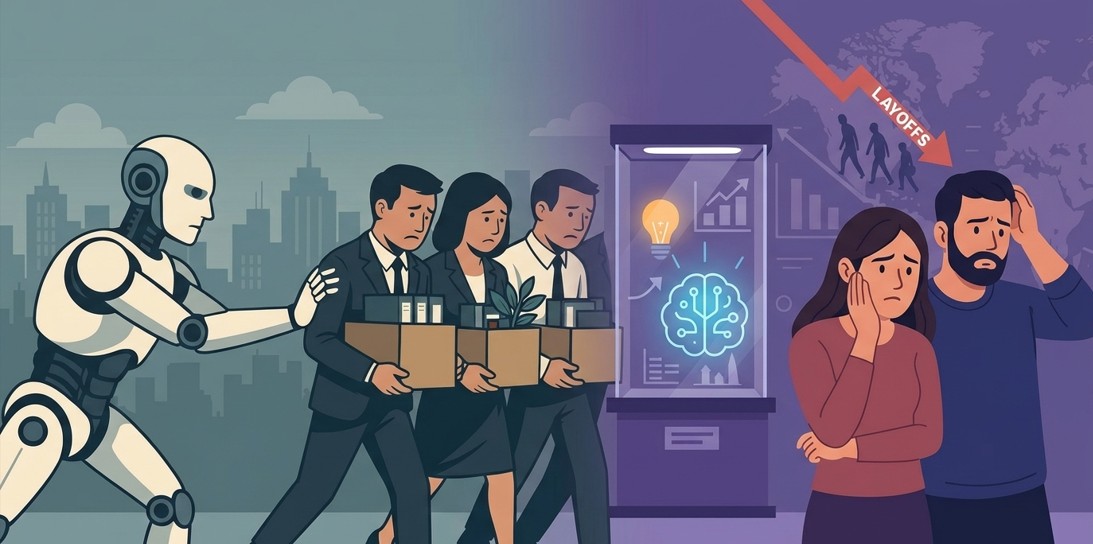
New Delhi : Anxiety is mounting among India’s technology workers as layoffs continue across the sector and hiring slows, with many fearing that advances in artificial intelligence (AI) could threaten long-term job security.
Neha, a 24-year-old software developer, lost her job at a private sector company on March 31 after receiving an early morning email about an “important update”. Within an hour, her access to internal systems was revoked. She was later informed that a significant portion of her team had been laid off.
“I didn’t think I would be affected,” she said, adding that she had been working on a key client feature. Neha had joined the company three years earlier after graduating from a leading engineering institute.
Rohit , a 28-year-old engineer working remotely from Himachal Pradesh for the same company, faced a similar experience. Unable to log in, he checked his email and discovered he had also been laid off.
“I had been thinking of staying for several years,” he said.
The layoffs are part of a broader trend affecting the global and Indian technology sectors. Companies have reduced workforce sizes and slowed recruitment as they increase investments in AI and adjust to changing business conditions.
While firms have not always disclosed specific reasons, analysts point to a mix of factors including cost pressures, over-hiring during the pandemic, and productivity gains from automation.
India’s IT sector, which employs millions and has long been viewed as a stable career path, is undergoing a structural shift. Industry data indicates a sharp decline in entry-level hiring, with net additions to the workforce falling significantly compared with previous years.
The rise of generative AI tools has intensified concerns. Although experts say fears of widespread job replacement may be overstated, they acknowledge that AI is reshaping roles, particularly for junior employees.
Karan Raj, a senior engineer at another private sector company, said AI tools have dramatically improved efficiency. “Tasks that once took days can now be completed in minutes,” he said. “But it also makes me question my role.”
He added that half his team was laid off last year, increasing uncertainty among remaining staff.
Research suggests that entry-level roles are most affected, as automation reduces demand for routine tasks such as testing and basic coding. Companies are increasingly seeking experienced professionals who can contribute immediately.
At the same time, a skills gap persists. India produces about 1.5 million engineering graduates annually, but industry estimates suggest only a fraction are equipped for emerging technology roles.
Experts caution against attributing all job losses to AI alone, noting the role of global economic conditions and corporate restructuring. Some have described the trend as “AI washing”, where companies cite AI as a reason for layoffs while addressing other financial pressures.
Despite the challenges, some workers are focusing on adapting to the changing landscape by developing skills in AI and related technologies.
“Technology is evolving, and we have to evolve with it,” Neha said.
Even so, uncertainty continues to define the sector, as workers weigh the benefits of AI-driven productivity against the risk of job displacement.
Disclaimer: Names of individuals have been changed to protect their identity.