



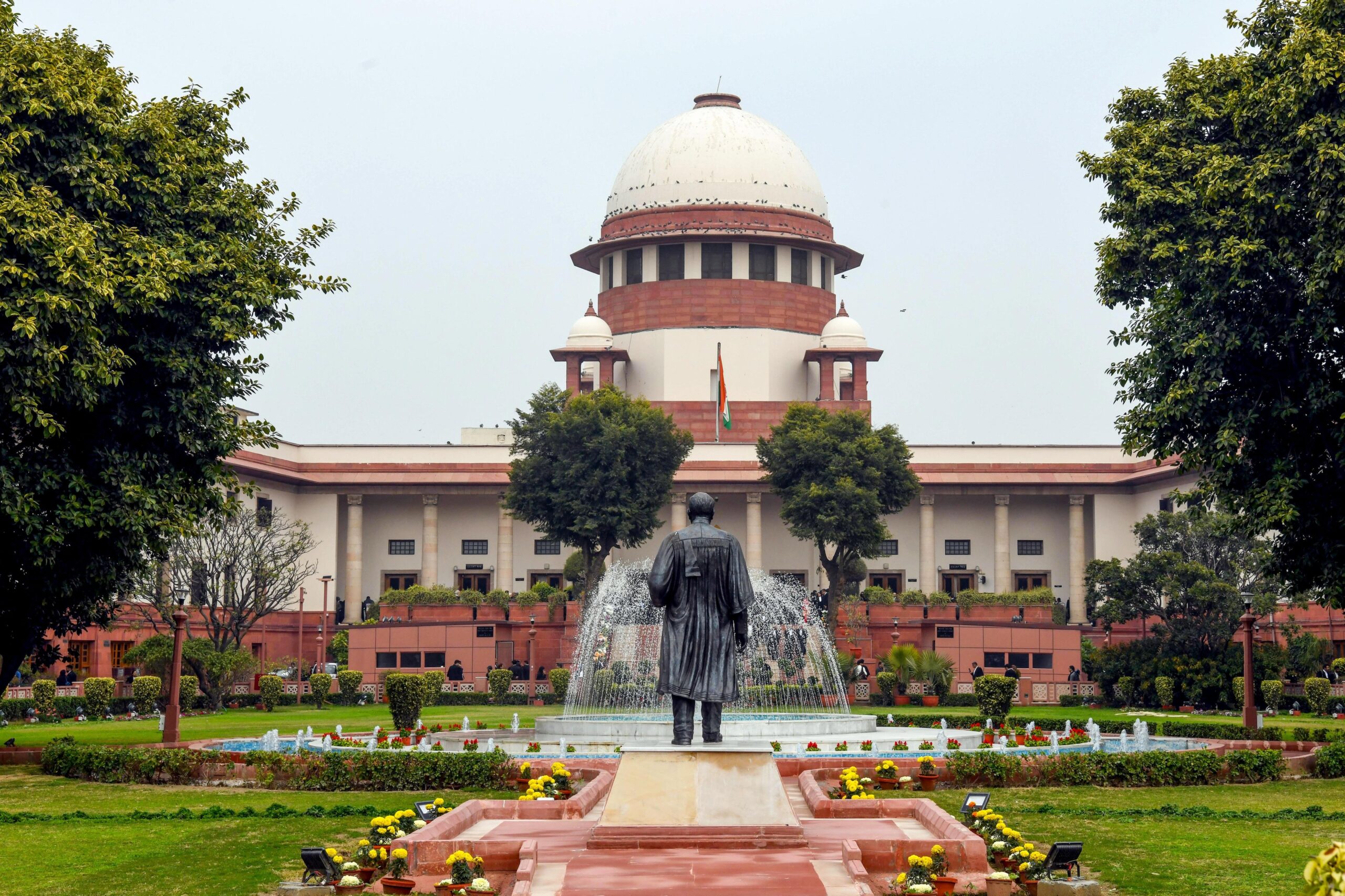
New Delhi, May 14: The Supreme Court of India on Thursday raised questions over the Centre’s process for appointing the Chief Election Commissioner (CEC) and Election Commissioners (ECs), asking why the Leader of Opposition was included in the selection panel if the government ultimately controlled the decision.
A Bench comprising Justice Dipankar Datta and Justice Satish Chandra Sharma made the observations while hearing petitions challenging the Chief Election Commissioner and Other Election Commissioners (Appointment, Conditions of Service and Term of Office) Act, 2023.
The court observed that the selection committee for appointing the Director of the Central Bureau of Investigation includes the Chief Justice of India (CJI), but the panel for appointing Election Commissioners does not have any independent member.
SC questions why should selection panel for Election Commissioners include cabinet ministerRead more At: https://t.co/Yn3ZXEqo2q
— kishan (@kishan536320) May 14, 2026
Under the 2023 law, the selection committee for appointing the CEC and ECs consists of the Prime Minister, the Leader of Opposition in the Lok Sabha and a Union Minister nominated by the Prime Minister.
Earlier, in its interim arrangement in the Anoop Baranwal v. Union of India case, the Supreme Court had directed that the Chief Justice of India should also be part of the appointment committee until Parliament enacted a law on the matter.
Petitioners argued that the 2023 legislation weakens the independence of the Election Commission of India because it removed the Chief Justice of India from the panel.
During the hearing, the Bench questioned Attorney General R. Venkataramani on whether a disagreement between the Prime Minister and the Leader of Opposition could realistically alter the outcome when the third member of the panel was also from the government side.
When the Attorney General indicated that such a possibility was unlikely, the court remarked that the executive appeared to retain complete control over the process. The Bench further observed that in such a situation, the role of the Leader of Opposition could become merely symbolic.
The matter remains under consideration before the Supreme Court.