



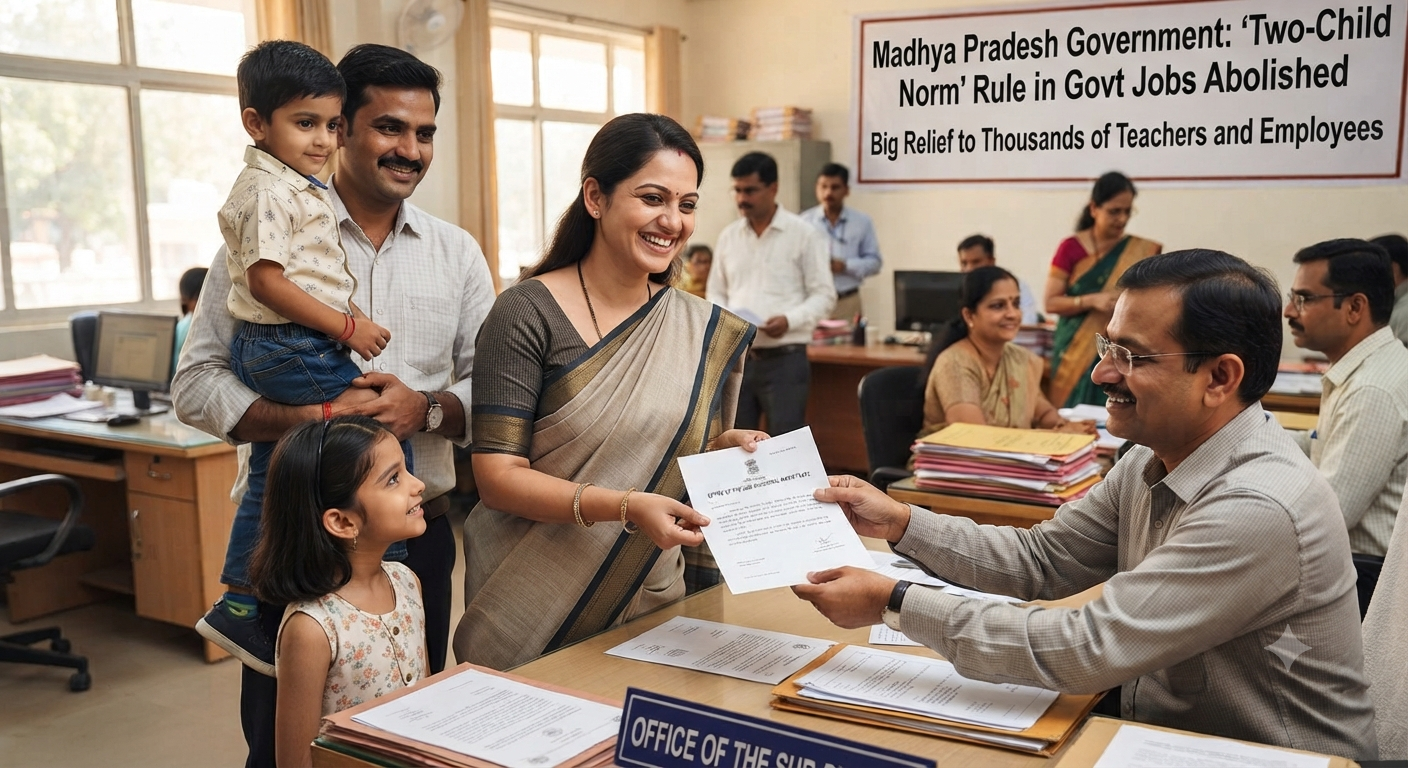
Big news for anyone dreaming of a government job in Madhya Pradesh! The state government has officially scrapped a strict 25-year-old rule that barred people with more than two children from getting state jobs. During a special cabinet meeting at Gandhi Sagar, the government approved an amendment to the 1961 Civil Services Rules.
This massive change brings instant relief to about 30,000 teachers and clears up thousands of pending cases, making it way easier for growing families to build stable careers without worrying about family size limits.
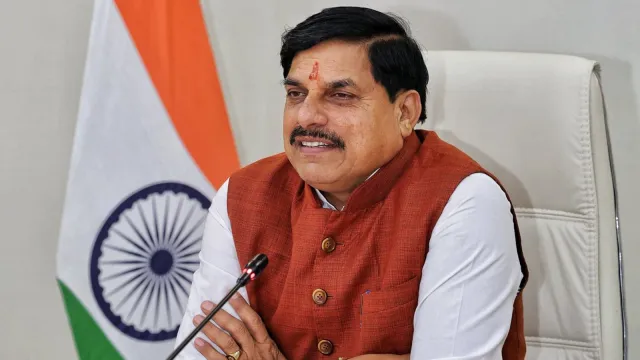
Chief Minister Dr. Mohan Yadav explained that the old rule created too many hurdles for government servants. He pointed out that since regular citizens are free to raise families, it does not make sense to tie down government employees with outdated restrictions.
Whether someone has three kids or four, they can now apply for and keep their state jobs just like anyone else. This major policy shift is all about treating government workers fairly and aligning public service rules with modern family life.
Big relief as thousands of pending cases are dropped
Big changes are also coming for employees who were already facing trouble under the old system. The government announced that all pending departmental inquiries and disciplinary actions related to having a third child will be completely dropped.
About 8,000 to 10,000 pending cases across various departments—especially in school education, higher education, and health—will finally be closed. However, there is a catch: if someone was already fired or punished with a final court order way back after 2001, those old cases will not be reopened.
This rule used to be brutally strict during the 25 years it was active, starting from January 26, 2001, under then-Chief Minister Digvijaya Singh. Back in September 2017, two additional district judges—Manoj Kumar and Ashraf Ali—were actually dismissed after their service books showed they had five and three children respectively.
Two trainee judges and three fourth-class employees also lost their jobs, while over 30,000 aspiring teachers missed out on recruitment. Many existing staff had their promotions and salary raises frozen, forcing several employees to hide information about their third child just to protect their livelihoods.
Big shifts in policy and fairer rules for everyone
Big debates over personal freedom and population trends also played a major role in this decision. In recent years, many people felt the rule unfairly interfered with personal family choices. Momentum to scrap the rule picked up speed after RSS chief Mohan Bhagwat raised concerns in Lucknow about declining population trends, noting that while India’s fertility rate is 2.1, an average of three children per family is important for society’s long-term survival.
Interestingly, the Supreme Court had previously upheld the two-child rule as legally valid for population control, meaning there was no legal pressure forcing the government’s hand—scrapping the ban was purely a policy choice by the state cabinet.
Other states have taken similar steps over the years. Rajasthan lifted its ban in May 2016, Chhattisgarh followed in July 2017, and Andhra Pradesh recently went a step further by announcing a ₹25,000 incentive for families having a third child. For young people in Madhya Pradesh studying for upcoming competitive exams, this means one less major worry on the road to a secure future. You can focus on your studies, ace your exams, and plan your life without stressing over old bureaucratic roadblocks.