



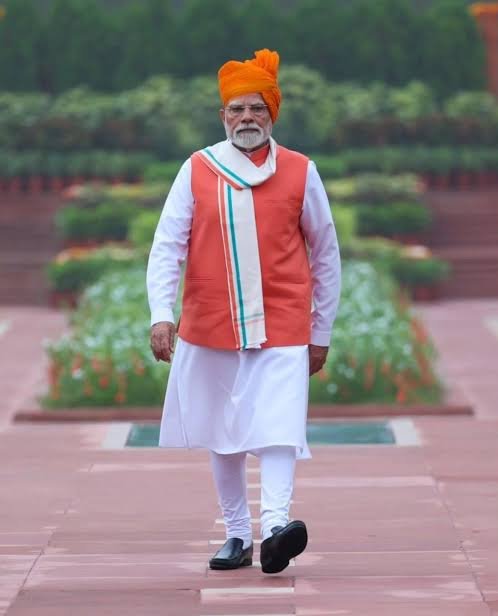
Modi has renewed his government’s commitment to women’s reservation by sharing a 53-second video from his April 18, 2026, address to the nation on social media platform X. On Saturday, November 28, Prime Minister Narendra Modi said the government would remove every obstacle standing in the way of women’s reservation in Parliament and state assemblies.
We had made a promise to our Nari Shakti and we remain committed to fulfilling it… https://t.co/ZT3TK71Psh
— Narendra Modi (@narendramodi) November 28, 2026
In the video, Modi said the government was determined to fulfil its promise of increasing women’s participation in the country’s legislative institutions. He also said political parties opposing the initiative would not be able to stop women from getting greater representation in Parliament and state legislatures.
The prime minister expressed confidence that he had the blessings and support of India’s women. He said the country’s women wanted greater participation in decision-making and that the government would continue working towards this goal.
Meanwhile, the proposed delimitation bill is gaining political support, with several opposition parties indicating their willingness to back the legislation. After the Nationalist Congress Party (Sharadchandra Pawar) and YSR Congress Party (YSRCP), Tamil Nadu Chief Minister MK Stalin’s Dravida Munnetra Kazhagam (DMK) announced its support on Saturday.
The Bharat Rashtra Samithi (BRS) has also announced its support for the proposed legislation.
The developments could prove important for the government as it seeks the required two-thirds majority to pass the constitutional amendment bill in Parliament.
Modi’s Women’s Reservation Promise and DMK’s Support for Delimitation
The prime minister’s video comes amid an intensifying political debate over women’s reservation and the proposed delimitation exercise.
Following a meeting of DMK leaders, party MP A. Raja said the party wanted Tamil Nadu’s Lok Sabha seats to increase from 39 to 59. However, the party also wants the state’s overall share of representation in Parliament to remain around 7.2 per cent even after the expansion.
According to the figures cited in the report, the DMK has 22 members in the Lok Sabha, while the Sharad Pawar-led NCP has eight and the YSRCP has four. Together, these three parties have 34 Lok Sabha MPs.
The support of these parties could increase the government’s reported strength from 320 to 354 MPs. However, the government would still need six additional votes to reach the required two-thirds majority of 360 in a House with 540 members.
The numbers could change if some opposition MPs remain absent during voting. For example, if all 37 Samajwadi Party MPs stay away, the required two-thirds majority would fall from 360 to 336, according to the calculations presented in the report.
In that situation, the combined support of the government and the three parties would be enough to cross the required threshold.
Delimitation Bill: What the Numbers Mean in Lok Sabha and Rajya Sabha
The proposed legislation also faces an important test in the Rajya Sabha, where the government needs a two-thirds majority to pass the constitutional amendment.
According to the figures provided in the report, the Rajya Sabha has 243 members. If all members are present, 162 votes would be required for the bill to pass.
The government is reported to have the support of 151 members. The Sharad Pawar-led NCP has one Rajya Sabha MP, while the YSRCP has four and the DMK has eight.
With the support of these three parties, the government’s total could reach 164, which is two votes above the required threshold.
The BRS has also announced support for the bill. The party has three Rajya Sabha MPs but no members in the Lok Sabha, according to the report.
The changing political positions of regional parties could therefore play an important role in determining the future of the legislation.
While the government is seeking wider support for the proposed changes, the opposition remains divided over the delimitation exercise. Some parties have raised concerns about how the redistribution of parliamentary seats could affect the political representation of individual states.
With the proposed bill becoming a major political issue, the coming parliamentary session is expected to witness important discussions and negotiations between the government and opposition parties.