




The Bhopal Municipal Corporation (BMC) is running a continuous Animal Birth Control (ABC) and anti-rabies vaccination drive across the capital city. Civic teams are catching, treating, and releasing stray dogs daily to control the street dog population and ensure public health safety.
Under the directions of Municipal Commissioner Sanskriti Jain, dedicated dog squads pick up stray animals from residential and commercial localities. Teams move the animals to three operational ABC centers established across Bhopal.
Surgeons carry out sterilisation procedures, administer anti-rabies vaccines, and keep the dogs under care until recovery. Once fit, workers return each animal strictly to the exact location where workers caught it.
During normal months, civic teams sterilise and vaccinate up to 100 stray dogs each day. Despite rain hazards, heavy downpours, and logistical challenges during the monsoon season, the three ABC centers process between 60 and 65 street dogs daily.
Sustained Population Control During Monsoon
Rainy weather typically slows down city operations, but dog squads maintain active field drives. Rain causes street dogs to seek shelter under parked vehicles, market shades, and residential porches, raising chances of human-animal conflicts.
By maintaining a minimum quota of 60 to 65 surgeries per day, BMC prevents seasonal disruptions in animal birth control. Continuous catching, operating, and releasing prevents sudden spikes in the street dog population once the monsoon ends.
Public Health Impact and Rabies Prevention
Sterilisation paired with mandatory anti-rabies vaccination forms the primary defense against rabies outbreaks in urban areas. Unvaccinated stray populations pose bite risks to pedestrians, children, and two-wheeler riders.
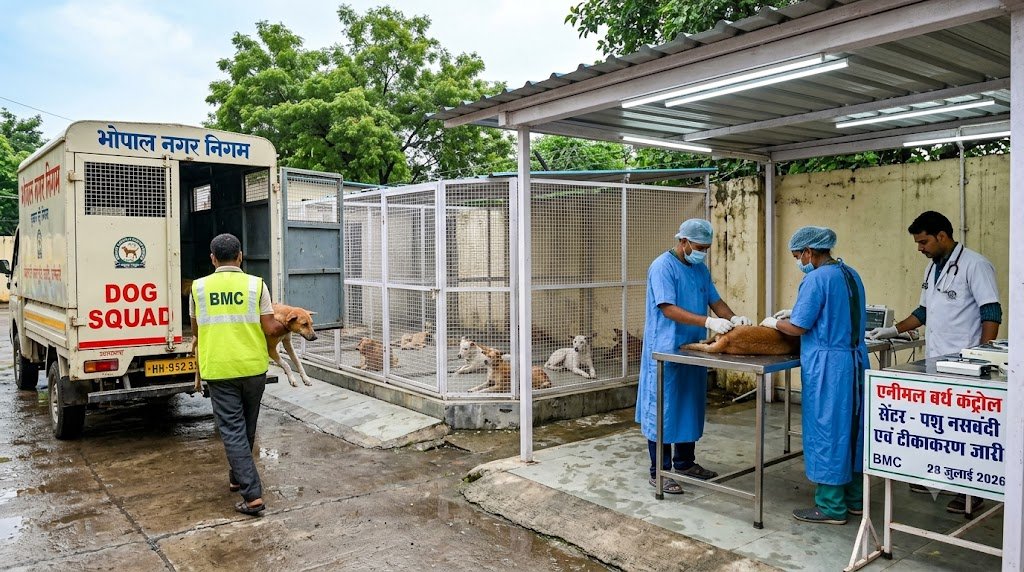
Vaccinating street dogs creates a biological barrier that stops rabies transmission from animals to humans. Regular drives save public health departments millions of Rs in emergency post-bite treatments while keeping municipal wards safer for residents.
Legal Compliance and Neighborhood Stability
Returning healthy animals to their original catching spot complies with national animal welfare regulations. Dogs are territorial creatures. Removing a stray permanently creates an empty territory, inviting unmanaged, unvaccinated stray dogs from neighboring areas.
Releasing sterilised, vaccinated dogs back to their original spots keeps local packs stable, non-aggressive, and immune to rabies. This practice stabilizes neighborhood dog populations while gradually reducing their numbers over time.
For more coverage on municipal administration, urban development, fuel prices, and state politics, read updates on Vision MP.