



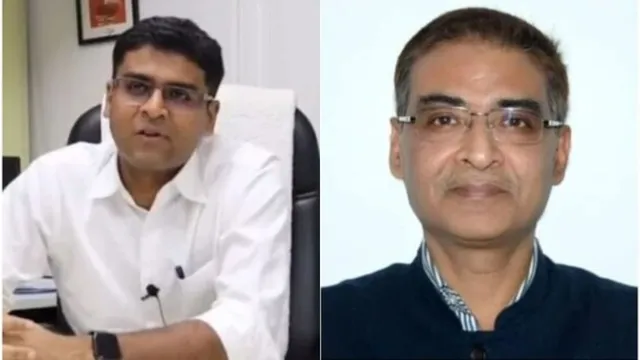
The Centre on Tuesday transferred CBSE Chairman Rahul Singh and Secretary Himanshu Gupta and ordered an inquiry into the tendering and procurement process of the Board’s controversial On-Screen Marking (OSM) system, following mounting concerns over Class 12 evaluation and result discrepancies.
The move comes amid growing scrutiny of the digital evaluation system introduced this year for Class 12 board examinations. The Ministry of Education has also constituted a one-member committee to examine the award of the OSM contract and related procurement procedures.
In a significant development, Class 12 student and technology researcher Sarthak Siddhant appeared before the Parliamentary Standing Committee on Education on Tuesday. It is believed to be one of the rare instances in which a student has been invited to directly present concerns before a parliamentary panel.
Siddhant raised questions about the implementation of the OSM system and alleged irregularities in the tendering process. He told the committee that his independent analysis had identified at least 15 issues in the digital evaluation framework and associated procurement documents. Following his presentation, the Ministry of Education sought a report from CBSE regarding the award of the contract to Hyderabad-based edtech firm COEMPT.
Parliamentary Standing Committee Chairman Digvijaya Singh said the panel would examine the issues highlighted by the student alongside the Board’s responses before reaching its conclusions.
Meanwhile, CBSE reported a cyberattack on its re-evaluation portal on Tuesday. According to the Board, the platform recorded approximately 1.5 million access attempts within two minutes, while more than 100,000 unauthorised attempts were made to access system files.
Despite the attack, the portal remained functional. By 3 pm, more than 16,000 students had successfully submitted applications for re-evaluation. The portal, which was originally scheduled to open on Monday, is expected to remain available until 6 June.
The controversy began after CBSE declared Class 12 results on 13 May. This year marked the first large-scale use of on-screen digital evaluation for answer scripts. Following the announcement of results, several students raised concerns over marks awarded in different subjects, prompting calls for a review of the evaluation process.
One of the students who questioned the results was Delhi-based Vedant Srivastava. After receiving 65 marks in Physics, he sought a review and later claimed discrepancies were evident in the evaluated answer script. CBSE subsequently acknowledged an error and apologised.
Sarthak Siddhant, a 17-year-old from Ranchi, separately examined hundreds of publicly available CBSE documents and procurement records. His findings drew attention to alleged inconsistencies in the tender process and intensified demands for an independent inquiry.
The controversy has also revived questions about COEMPT, the Hyderabad-based company involved in digital evaluation services. Previously known as Globarena Technologies Pvt Ltd, the firm has worked with several state education boards, including those in Telangana, Karnataka and West Bengal. The company faced criticism in Telangana in 2019 following allegations of data-processing errors during Intermediate examinations.
The Parliamentary Standing Committee on Education comprises 31 members drawn from both Houses of Parliament. The committee reviews education-related policies and institutions and has previously examined issues concerning the National Testing Agency (NTA) and the conduct of national examinations.
In a report submitted in December 2025, it recommended stronger safeguards, improved examination security and reduced dependence on private agencies in assessment systems.
For more coverage on inflation, fuel prices and Madhya Pradesh politics, read updates on Vision MP.