



New Delhi: The Centre has imposed a 200-litre daily limit on diesel sales through retail fuel outlets under a temporary order aimed at preventing black marketing, hoarding and the diversion of fuel meant for ordinary consumers.
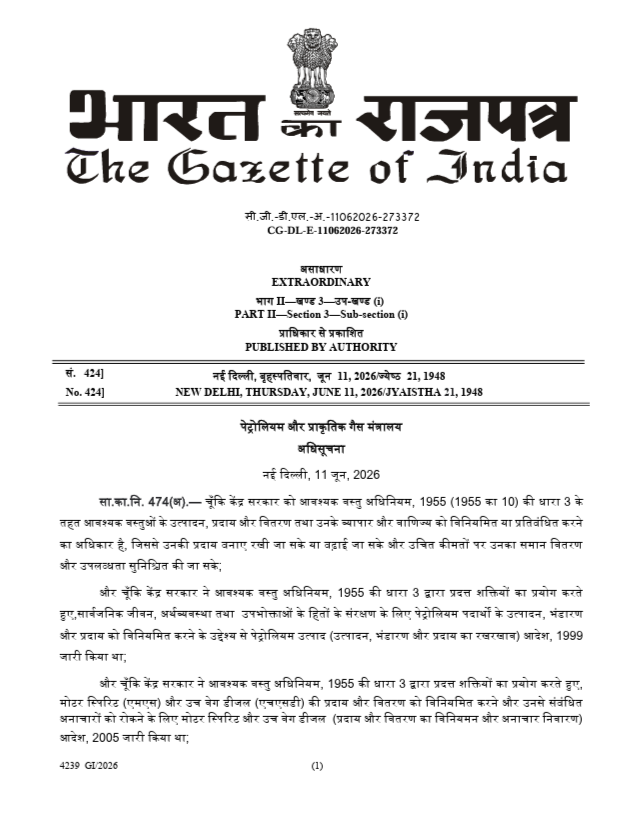
The Ministry of Petroleum and Natural Gas on Thursday notified the “Motor Spirit and High-Speed Diesel (Temporary Regulation of Supply through Retail Outlets) Order, 2026”. The order will remain in force for up to 90 days and is intended to ensure uninterrupted diesel availability for retail consumers.
Under the new rules, retail outlets will be allowed to dispense diesel only into vehicle fuel tanks or Petroleum and Explosives Safety Organisation (PESO)-approved containers. A customer or vehicle will not be permitted to buy more than 200 litres of diesel in a day from retail outlets.
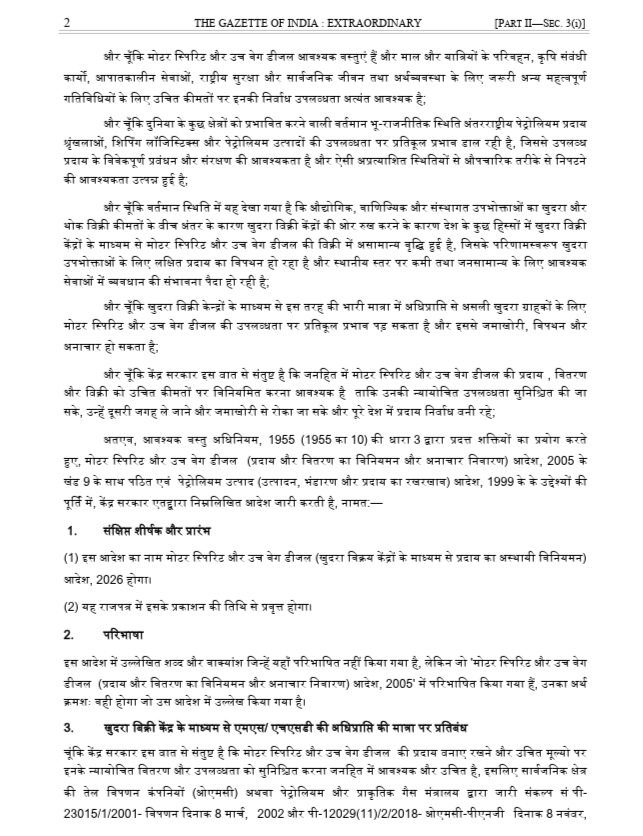
The government has also barred industrial, institutional and commercial consumers from purchasing diesel at retail pumps. Such consumers will now be required to source fuel through dedicated consumer pumps.
The ministry said the decision follows a sharp rise in diesel demand at public sector fuel stations. According to government data, 327 districts recorded more than 10 per cent growth in diesel sales during May 2026 compared with the same period last year, while 80 districts saw growth exceeding 30 per cent.
Officials said many bulk consumers shifted purchases to retail outlets because retail diesel is significantly cheaper than bulk diesel. The government noted that public sector oil marketing companies are currently absorbing losses of around Rs 500 crore per day on the sale of petrol, diesel and domestic LPG to shield consumers from global price volatility linked to the ongoing West Asia situation.
According to the ministry, retail diesel is currently around Rs 40 per litre cheaper than bulk diesel, creating an incentive for large consumers to buy fuel from retail pumps.
The government also cited instances of large-scale procurement of diesel in jerry cans and its subsequent resale. It said the new order would enable authorities to take action against those involved in black marketing and unauthorized diversion of fuel.
Public sector oil marketing companies, including Indian Oil Corporation, Bharat Petroleum Corporation and Hindustan Petroleum Corporation, have been directed to ensure compliance with the new restrictions.
State governments and Union Territory administrations have also been asked to act against violations, including black marketing and unauthorized fuel diversion. Offenders may face penalties under the Essential Commodities Act, 1955 and other applicable laws.
The government stressed that the measure is temporary and should not be seen as fuel rationing. It maintained that there is no shortage of petrol or diesel in the country and said India continues to have adequate refining capacity and fuel supplies.
For more coverage on inflation, fuel prices and Madhya Pradesh politics, read updates on https://visionmp.com/.