



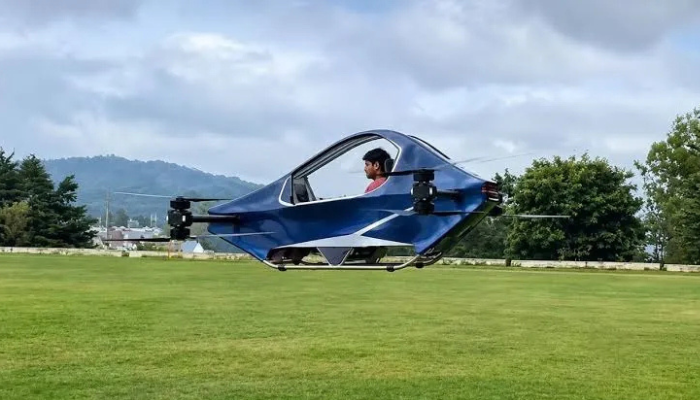
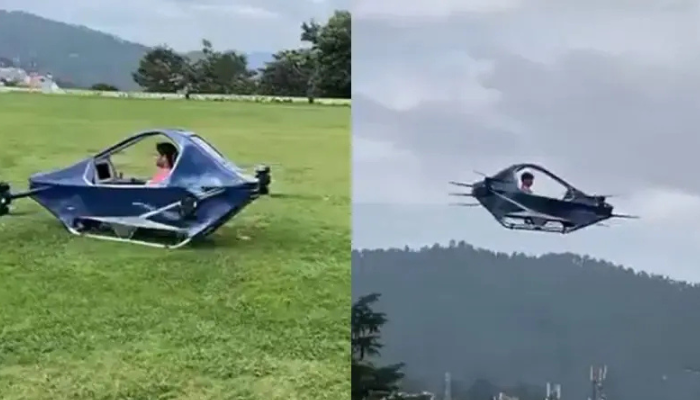
A self-taught innovator from Uttarakhand’s Almora district has developed a prototype of an electric flying vehicle after years of learning and practical experimentation. Ravi Tamta, a Bachelor of Arts graduate with no formal engineering education, is behind the single-seater vehicle, called HAPIDA SKYNeX.
According to published reports, the prototype completed a test flight in August 2026. Further technical assessments are needed to establish its safety, performance and readiness for wider use.
An idea inspired by mountain travel
Tamta, who comes from Kaflikhan near Jageshwar Dham, reportedly began pursuing the idea in 2015. The challenges of travelling across mountainous terrain are said to have influenced his interest in alternative transport options.
Developed through his venture, Hapida Sky Private Limited, the prototype is designed for vertical take-off and landing. It uses electric motors and propellers, similar to those found in multirotor drones.
The vehicle features a lightweight frame, a cockpit and a transparent canopy. Details about its flight range, payload capacity and battery performance require technical verification.
Learning beyond the classroom
Tamta reportedly developed his technical knowledge through online resources, experimentation and practical learning. His journey highlights how independent learning can help people explore ideas beyond formal education.
However, aircraft development involves complex engineering challenges, including flight stability, structural strength, battery reliability and emergency safety systems.
Earlier inventions and future possibilities
Published accounts have also attributed several other projects to Tamta, including a mobile-charging shoe, a smart walking stick for people with visual impairments, a bamboo-splitting machine and firefighting equipment. Independent verification would help establish the capabilities and practical use of these inventions.
The flying vehicle could potentially be explored for short-distance travel in remote areas, but its suitability for medical emergencies or passenger transport has not been established.
Safety remains a priority
Before the prototype can be used for passenger transport or commercial operations, it would need to meet applicable aviation safety requirements and obtain the necessary regulatory approvals from the relevant authorities, including the Directorate General of Civil Aviation, where applicable.
For now, the reported test flight represents an early development milestone. Further testing and independent technical validation will be essential to determine whether the concept can progress towards practical use.